

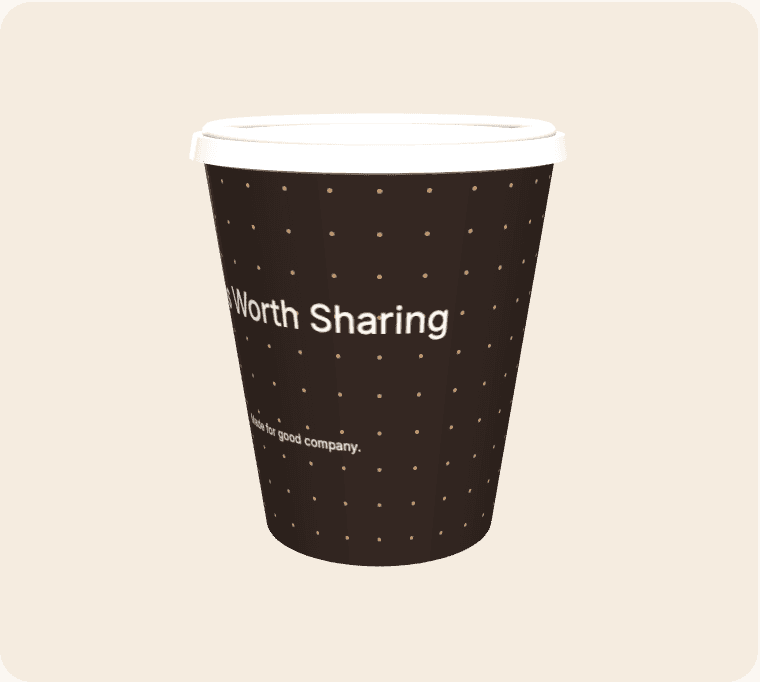
At a conference or exhibition, a cup can connect a short conversation with a longer follow-up. The useful next step might be a session resource, a demonstration page or a way to contact the right team. Make that action specific. A visitor who is carrying a drink between stands is unlikely to read a long sales pitch, and the cup should not make promises that the linked page or staff cannot fulfil.
Choose the follow-up destination
Decide what the visitor should reach before designing a QR code or short URL. A focused event page is often easier to understand than a general homepage. Test it on a phone and confirm that it will remain available after the exhibition closes.
Check shared-brand rules
Venue, organiser and exhibitor requirements can overlap. Obtain the correct files and clarify whether a cup is part of a stand giveaway, a hosted meeting or a shared refreshment service. That decision helps establish which brand should be prominent and who approves the final artwork.
Match stock to the meeting plan
Estimate use from realistic conversations or hospitality sessions rather than total venue footfall. A small meeting room and a large open stand have different demand patterns. Ask the team how drinks will actually be offered and where cartons can be stored.
Keep the follow-up trustworthy
If the linked page collects contact information, explain what the person is signing up for. Do not treat a scan as automatic permission for unrelated marketing. Coordinate the cup, the destination page and the follow-up team so the same promise appears throughout the journey.
From a brief to a reviewable design
Open the suggested template as a starting point, then replace its sample wording and artwork with material you are entitled to use. Select an active cup size and compare the editing surface with the curved wrap. Treat the seam, bleed and safe-area indicators as guidance based on the current geometry; supplier confirmation is still required before production.
Save a clearly named revision before asking other people to review it. Give reviewers a specific checklist: identity, spelling, contact details, placement and the intended destination of any code. Consolidate their feedback into one version instead of treating several similar files as equally final. Screen previews help with layout, but they do not certify material suitability, exact colour, resolution or a production-ready PDF.
Compare the complete project
Use the live calculator for quantities, turnaround options, extras and estimated delivery. Keep VAT and delivery assumptions visible when comparing scenarios. The figures are indicative until commercial details are confirmed, and a production range is not a courier guarantee. The estimator uses configured working days, cut-off time, closure dates and the England-and-Wales holiday calendar.
Live payments and manufacturing release remain closed while merchant and supplier acceptance is outstanding. Preparing a design is still useful: it gives the team a concrete brief to review. Confirm the actual product, commercial terms and receiving arrangements before announcing an arrival date or treating the artwork as approved for manufacture.