

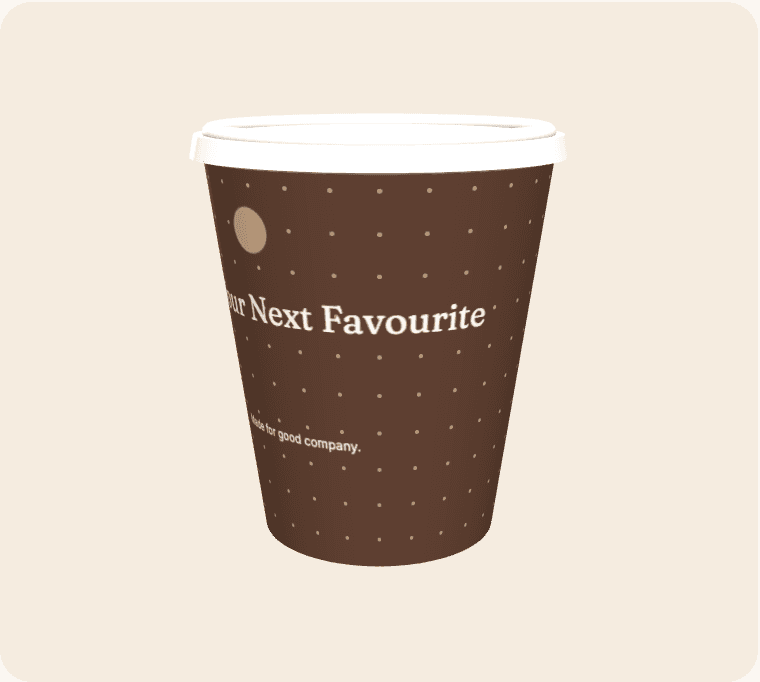
Cup advertising puts a message on an object used during a real service interaction. That setting creates possibilities, but it does not guarantee attention or sales. A responsible brief explains who distributes the cups, where they will be used, what the advertisement says and how results will be assessed. Treat audience claims and permissions as part of the project, rather than adding an impressive-looking exposure number after the artwork is finished.
Confirm the advertising arrangement
If a third party will serve drinks in the cups, agree the placement and responsibilities first. Clarify whether the venue, caterer or organiser approves the artwork. A design file alone does not establish permission to distribute branded material through someone else’s service.
Make one claim well
Choose a clear proposition that can be understood without close reading. Verify factual statements and significant offer conditions. If the subject needs a long qualification, consider whether the cup should simply introduce a topic and direct people to a fuller explanation.
Separate reach from response
Stock supplied, cups used, people exposed and resulting enquiries are different measures. Explain what you can actually observe. A QR visit may help measure one kind of response, but it should not be multiplied into an unsupported claim about everyone who might have seen the cup.
Review the receiving experience
Check what happens when someone follows the advertisement. The destination should work on a phone, match the promise and explain any data collection. A well-designed cup loses credibility if its code opens an unrelated page or an expired offer.
From a brief to a reviewable design
Open the suggested template as a starting point, then replace its sample wording and artwork with material you are entitled to use. Select an active cup size and compare the editing surface with the curved wrap. Treat the seam, bleed and safe-area indicators as guidance based on the current geometry; supplier confirmation is still required before production.
Save a clearly named revision before asking other people to review it. Give reviewers a specific checklist: identity, spelling, contact details, placement and the intended destination of any code. Consolidate their feedback into one version instead of treating several similar files as equally final. Screen previews help with layout, but they do not certify material suitability, exact colour, resolution or a production-ready PDF.
Compare the complete project
Use the live calculator for quantities, turnaround options, extras and estimated delivery. Keep VAT and delivery assumptions visible when comparing scenarios. The figures are indicative until commercial details are confirmed, and a production range is not a courier guarantee. The estimator uses configured working days, cut-off time, closure dates and the England-and-Wales holiday calendar.
Live payments and manufacturing release remain closed while merchant and supplier acceptance is outstanding. Preparing a design is still useful: it gives the team a concrete brief to review. Confirm the actual product, commercial terms and receiving arrangements before announcing an arrival date or treating the artwork as approved for manufacture.